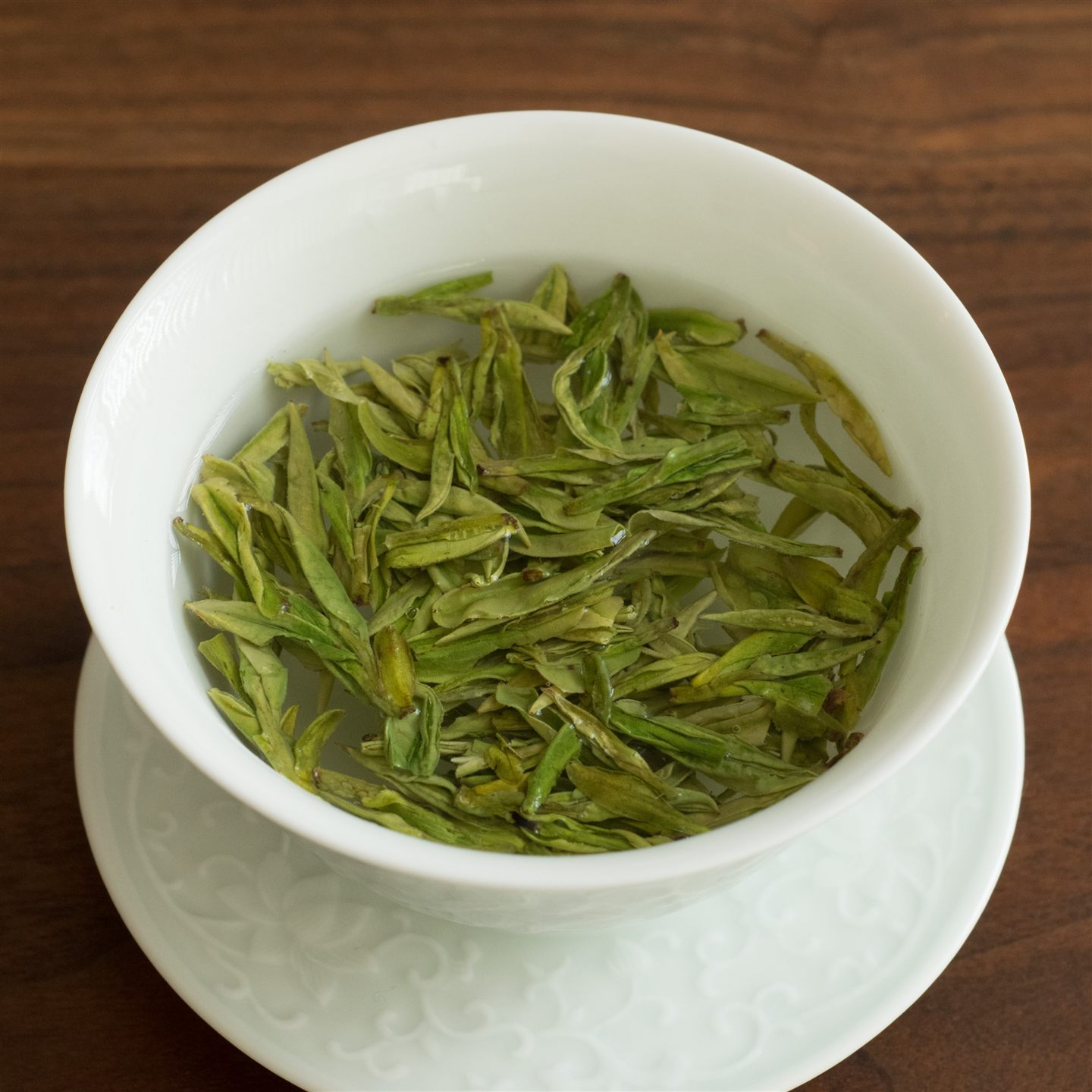
Everyday starting point: try 3 g of loose leaf tea in about 200 ml of water in a mug. Adjust the dose and steeping time for your tea and taste.
Choose a vessel you can pour from
A mug with a removable infuser is enough to begin. The infuser lets you separate the leaves from the liquor when the cup tastes ready. A small porcelain gaiwan offers another approach: more leaf in less water, poured out after short infusions. It is useful for following how the same leaves change over several pours, but it is not a requirement for enjoying Chinese tea.
Know the vessel’s approximate capacity before measuring leaf. A gaiwan often uses more leaf and shorter infusions than a mug. Do not copy its steeping time into a mug recipe without changing the ratio.
This is a mug starting point, not a universal recipe. A gaiwan uses a different leaf-to-water ratio.
Make an everyday first cup
For a first mug, use the 3 g to 200 ml starting point and remove the infuser when the flavor is pleasant. As a trial, check a green tea after about one minute and an oolong after about two minutes. These are prompts to taste, not universal ideals. If the package gives a different method, begin there.
For delicate green tea, cooler water around 80–85°C is a common starting range in producer guides. Many oolongs are brewed hotter, around 95–100°C, though style and maker recommendations vary. Pour carefully, especially when using a lidded gaiwan: hot porcelain and escaping steam can burn fingers.
- Measure leaf and water once so the next attempt is easy to adjust.
- Use a timer for the first attempt; taste before deciding whether to extend it.
- Pour the brewed tea off the leaves, or lift the infuser, to stop that infusion.
Try short, repeated infusions
To try a gaiwan, follow the tea’s brewing note. Producer guides often use roughly 100 ml vessels with several grams of leaf, then infusions measured in seconds rather than minutes. The dose differs between green tea and oolong. Fill only to a level you can safely handle, cover, and pour fully into a cup or sharing pitcher.
Taste the first pour. If it is thin, add a little time to the next one. If it is harsh, shorten the next infusion or lower the leaf dose next time. Later pours may need more time as the leaves give up flavor. There is no required number of infusions: stop when the tea no longer makes a cup you enjoy.
Fix the cup by changing one thing
Strength depends on leaf amount, water volume, heat, and contact time. Keep three steady while changing the fourth. A bitter green tea may improve with a shorter infusion or slightly cooler water. A weak oolong may benefit from a little more leaf or a longer pour. A flat or odd-tasting cup may point to the water rather than the leaves.
Note the tea, vessel, dose, temperature, and time. Your repeatable recipe will be more useful than a chart that treats every Chinese tea as identical.
