What is inside a jasmine pearl?
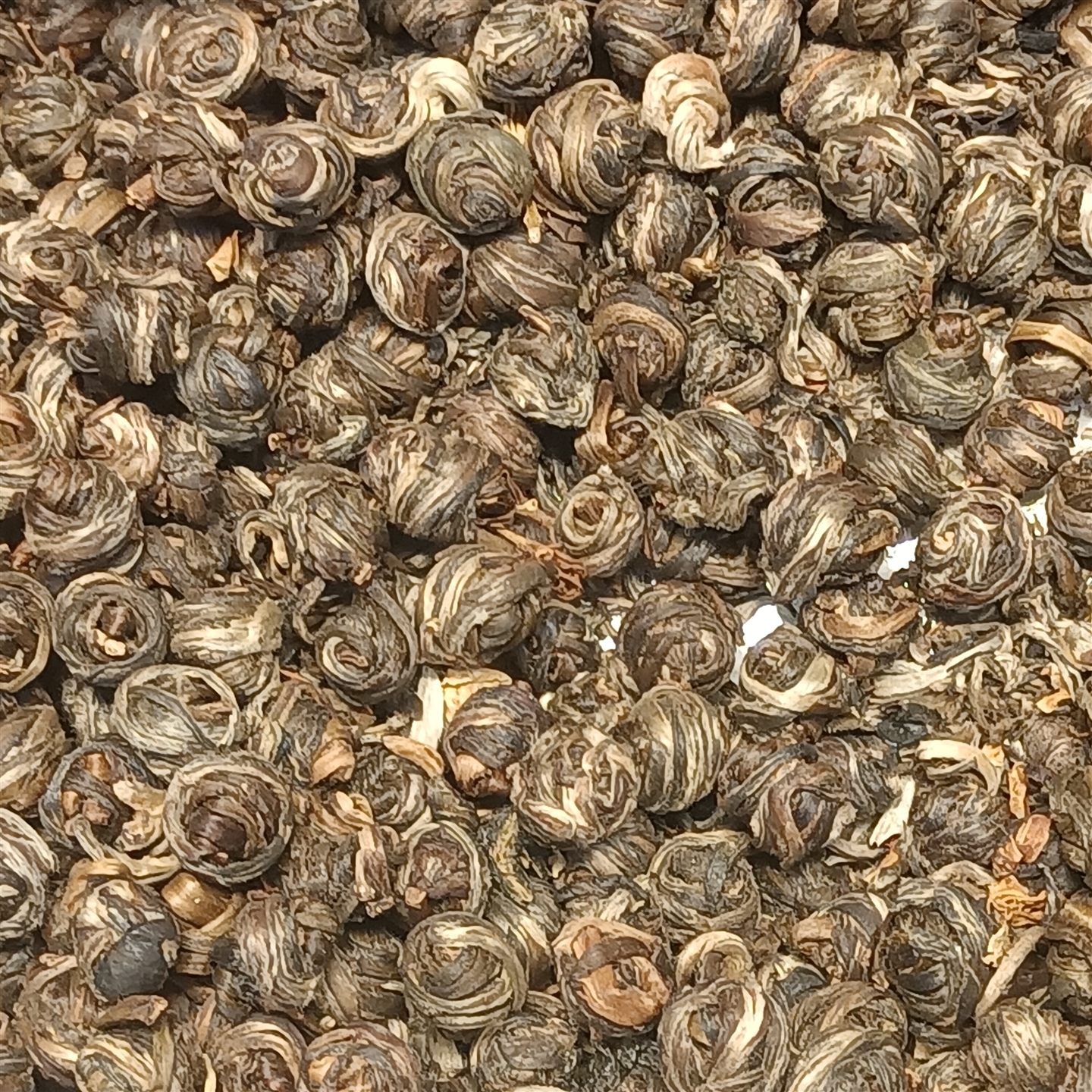
A pearl is rolled tea leaf, often made with tender buds and leaves. As it steeps, the tight ball loosens and shows the leaf material that was folded into it. Jasmine petals do not have to be rolled inside. Young green leaves can provide a soft, smooth cup beneath the vivid floral aroma. The exact leaf and handling differ between teas, so that description is a helpful possibility rather than a specification for every pearl sold today.
The leaf is usually green tea, although a package should identify its own base rather than leave you to infer it from the word 'jasmine'. 'Pearls' describes a shape, 'green' describes a tea type, and 'jasmine' describes the scent. Keeping these three ideas separate makes labels easier to read. It also helps you compare a rolled pearl with a loose jasmine green tea without assuming one method must taste better.
How rolling and scenting fit together
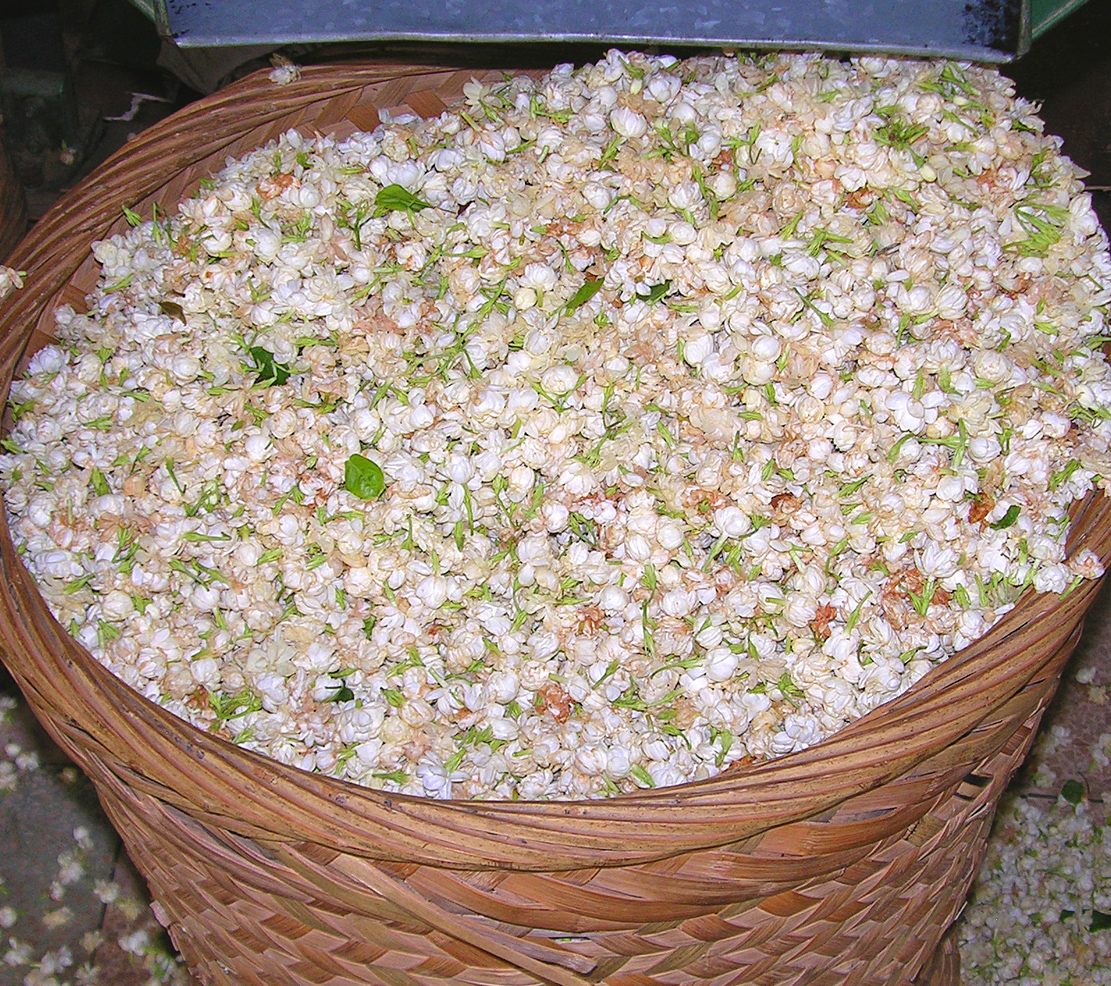
A maker first prepares the tea leaf and forms the small balls, commonly by hand for carefully made pearls. Fresh jasmine flowers are then brought into contact with the tea. Producer descriptions differ on the details: one account describes dried pearls layered with flowers over successive nights, while another describes a named Fuzhou tea going through rounds of piling, mixing and baking. Neither process requires a flower to remain inside each finished pearl.
Opening jasmine flowers release aromatic compounds, which the tea takes up. After a round, spent flowers may be separated and the tea dried before more fresh flowers are introduced. That is why the dry leaf can smell floral even when no petals are visible. The strength and balance depend on the base tea, flowers, handling and number of scenting rounds. A fixed claim such as 'every good pearl is scented nine times' would miss the variation between real batches.
Rolling and scenting are different skills. A neat, uniform pearl can show care in shaping, yet appearance cannot verify the source of its aroma. Likewise, a scattering of dried petals is a visual detail rather than proof of fresh flower scenting. If the method matters to you, look for a specific account of the flowers used and the producer's process.
Why Fuzhou is associated with jasmine tea
Fuzhou in Fujian has a long jasmine and tea tradition. Its landscape and farming practices are recognized by the UN Food and Agriculture Organization as a Globally Important Agricultural Heritage System. The connection explains why Fuzhou often appears in descriptions of jasmine pearls, and why flower picking and scenting are treated as skilled stages of production rather than an afterthought.
A jasmine pearl need not come from Fuzhou. Producers also make rolled jasmine tea elsewhere in China, and a name alone cannot establish the exact garden, cultivar or maker. A clear product description can tell you the base tea's origin and harvest, where scenting took place, and whether the flowers were removed. If those details are absent, the honest answer is that the packet does not tell you.
Brew a cup and watch the leaf open
Give the pearls room to expand in a broad infuser, small pot or cup. For a mug of about 225 ml, one heaped teaspoon of a green tea pearl and water around 85–90°C for roughly three minutes is a practical starting point, based on a jasmine pearl seller's cup instructions. It is a starting recipe for this vessel size, not a temperature or time all jasmine pearls require. Check the maker's directions for your batch, then change one variable after tasting.
Pour off or remove the leaf when the cup reaches the strength you want. If it feels heavy or rough, try a shorter steep or a little less leaf next time. If the floral scent is lovely but the tea body seems thin, try slightly more leaf before extending the time. The pearls may give several infusions, with the leaf and flower notes changing as they open. How many pleasant cups you get depends on the tea, dose, water and vessel.
A light cup may put jasmine in front, with grassy or fruity notes underneath. Use those as things to notice, not a promise for an unidentified packet. Smell the dry pearls, then the wet leaf, and finally the cup after it cools a little. The difference between those aromas can tell you more than the colour of the liquor alone.
What to compare when choosing a tea
A useful comparison begins with the base tea and the scenting account. Does the seller identify green tea, the origin of the leaves, and fresh jasmine flowers? Are scenting rounds stated for this tea rather than as a claim about all pearls? Does the description explain whether petals were removed? These details help you judge what is being offered, while leaving space for the cup itself to be the final test of preference.
Keep the tea sealed, dry and away from bright light, heat and strong household smells. The aroma is a central part of a jasmine pearl, so avoid storing it beside coffee or spices. Buy an amount you can enjoy while the fragrance is lively rather than choosing by the visual appeal of the rolled leaves alone.


